
02_PLAYGROUND
6:10 PM

Attack on Titan is the greatest story ever made
Decoding: Attack on Titan (anime, 2013–2023)
In one line: it looks like a monster show, but it’s really about why good people end up doing terrible things, and about loving someone enough to let them go.
I’m just going to say it. Attack on Titan is the greatest story ever made. I don’t mean the greatest anime, I mean the greatest story, books and films included.
I know how that sounds, so let me try and explain why I actually believe it.
The short version (no spoilers)
Humanity lives behind giant walls. Outside those walls are titans, huge grinning things that eat people, and nobody knows why. A kid named Eren watches one of them eat his mother, and he promises himself he’ll kill every last one of them.
That’s the setup, and yes, it sounds like a monster show. It really isn’t one.
Every season or so, the story flips on you. Who the enemy is, why the walls exist, which side you’re even supposed to be on, all of it keeps changing. By the end you stop asking how to kill the monsters and start asking how a person turns into one.
If you haven’t watched it yet, please stop here and go watch it first. Everything below spoils the whole thing, ending included.
Spoilers from here on.
Nobody in this story is good
Most stories give you a hero and a villain. Attack on Titan gives you people, and the walls they grew up behind.
It’s like a family fight where everyone in the room thinks they’re the reasonable one. Nobody is really lying. Everyone is telling the truth as it looks from where they’re standing. Now stretch that across whole countries, and that’s this show.
Eren grows up thinking the people across the sea are monsters. Then he goes there and finds out they were raised to think the exact same thing about him. The boy who wanted to wipe out every titan becomes the scariest thing in the story, and he never once stops believing he’s in the right.

The Final Season, Episode 5, “Declaration of War”. © Hajime Isayama, Kodansha / “Attack on Titan” The Final Season Production Committee. Screenshot via Attack on Titan Wiki.
The show never tells you who to blame. It just keeps showing you why each person did what they did, until you can’t properly hate any of them anymore. That’s the part that stays with me. Everyone is acting on what their own life taught them to believe.

Season 3, Episode 10, “Friends”. © Hajime Isayama, Kodansha / “Attack on Titan” Production Committee. Screenshot via Attack on Titan Wiki.
Kenny Ackerman says it best, which is funny, because he’s a killer and he says it while he’s dying:
“Everyone had to be drunk on something to keep pushing on. Everyone was a slave to something.”
Kenny Ackerman, Season 3, Episode 10
He looks back at everyone he knew and sees the same thing in all of them. Some were drunk on power, some on a dream, some on family, some on an idea of how the world should be. None of them were free. They were just loyal to different things.
That’s about as close as the show gets to a moral. It never tells you to be good. It just asks you to notice what you’re drunk on.
Armin, the softest person in the whole series, puts the cost of it differently:
“Someone who can’t sacrifice anything can never change anything.”
Armin Arlert, Season 1
When he first says it, it sounds brave. By the end you know exactly what it costs.
It isn’t really Eren’s story
Eren is on the poster and in the opening, and he’s the one pushing the plot forward. But I don’t think it’s his story. I think it belongs to two women, Mikasa and Ymir.

The Final Season. © Hajime Isayama, Kodansha / “Attack on Titan” The Final Season Production Committee. Screenshot via Attack on Titan Wiki.
Everything starts with Ymir. Two thousand years before Eren, she was a slave who got the power of the titans, and she still kept serving the king who owned her. She died taking a spear that was meant for him. Even death didn’t end it. For two thousand years she kept making titans for his bloodline, because she loved him and couldn’t stop obeying him.
Sit with that for a second. Every wall and every war in this world comes from one woman who couldn’t let go of someone she loved.
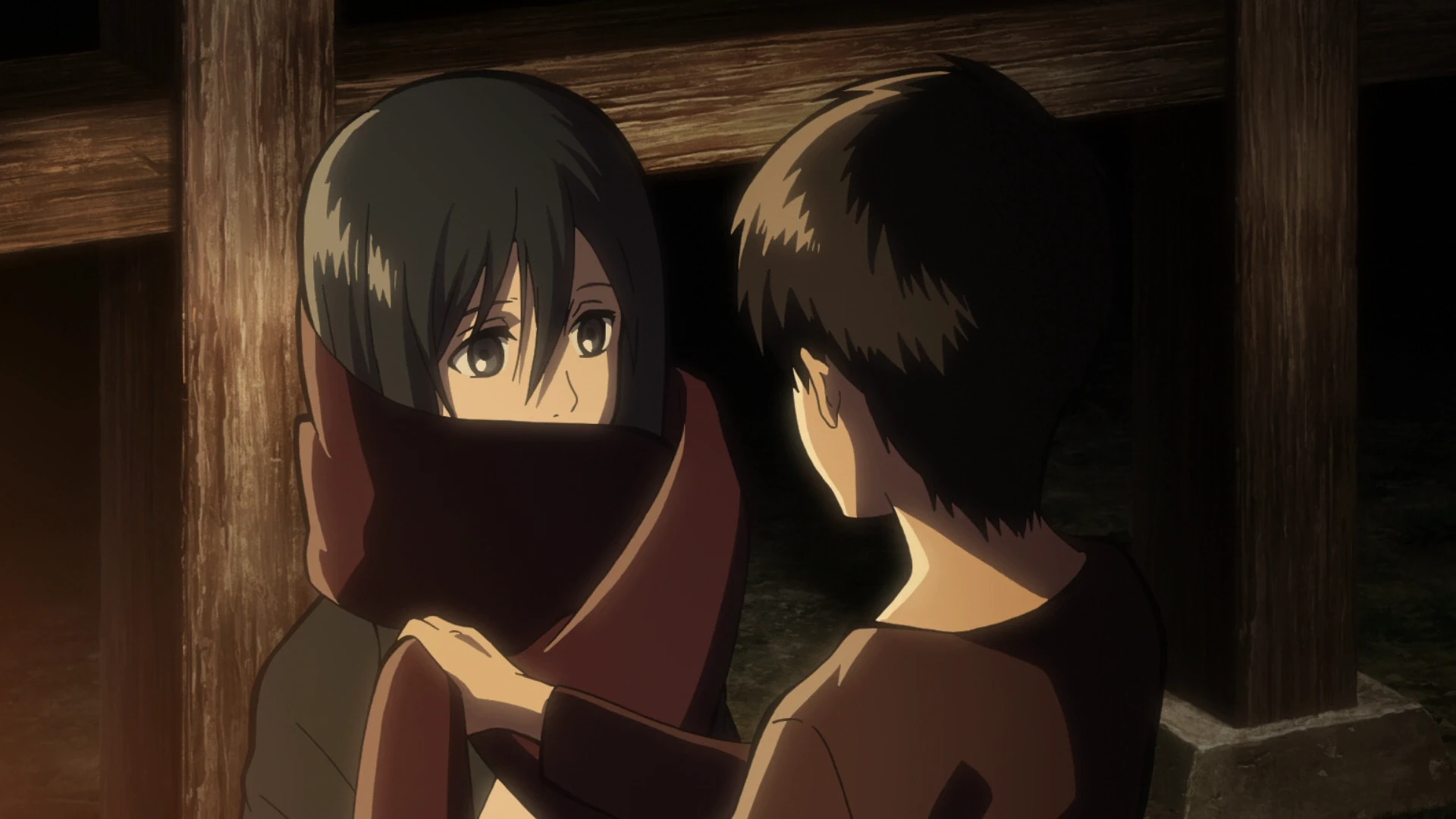
Season 1, Episode 6. © Hajime Isayama, Kodansha / “Attack on Titan” Production Committee. Screenshot via Attack on Titan Wiki.
Then there’s Mikasa. She has followed Eren since they were kids, ever since the day he wrapped his red scarf around her neck. She’s the strongest fighter in the show, and nearly everything she does, she does for him.
At the end, Eren is about to wipe out most of the world, and Mikasa does the one thing Ymir never could. She stops the person she loves.
Then we find out Ymir had been watching Mikasa all along. For two thousand years she was waiting for someone to show her that you can love a person and still refuse to follow them. When Mikasa makes that choice, Ymir is finally free, and the titans are gone from the world.
So under all the monsters, it was a love story the whole time. Even the very first episode is called To You, in 2000 Years. I’m pretty sure it’s addressed to Ymir.
The greatest love story, with almost no romance
This is the part that gets me the most. In four seasons there are no dates, no confessions, no slow dances. The closest we get is a life Eren and Mikasa only get to imagine, and one goodbye right at the end.

The Final Chapters, Special 2. © Hajime Isayama, Kodansha / “Attack on Titan” The Final Season Production Committee. Screenshot via Attack on Titan Wiki.
And somehow it’s still the most powerful love story I know.
Think of a parent watching their kid leave home. Loving them means letting them go, even when every part of you wants to hold on. Most love stories are about two people ending up together. This one is about the moment love asks you to let go.
Mikasa’s love for Eren never looks like romance. It looks like a scarf she never takes off, and a choice she never wanted to make.
Early on, Mikasa says the line the whole series is built on:
“This world is cruel… but it’s also very beautiful.”
Mikasa Ackerman, Season 1, Episode 6
By the last episode, Toward the Tree on That Hill, you realise she meant both halves of it.
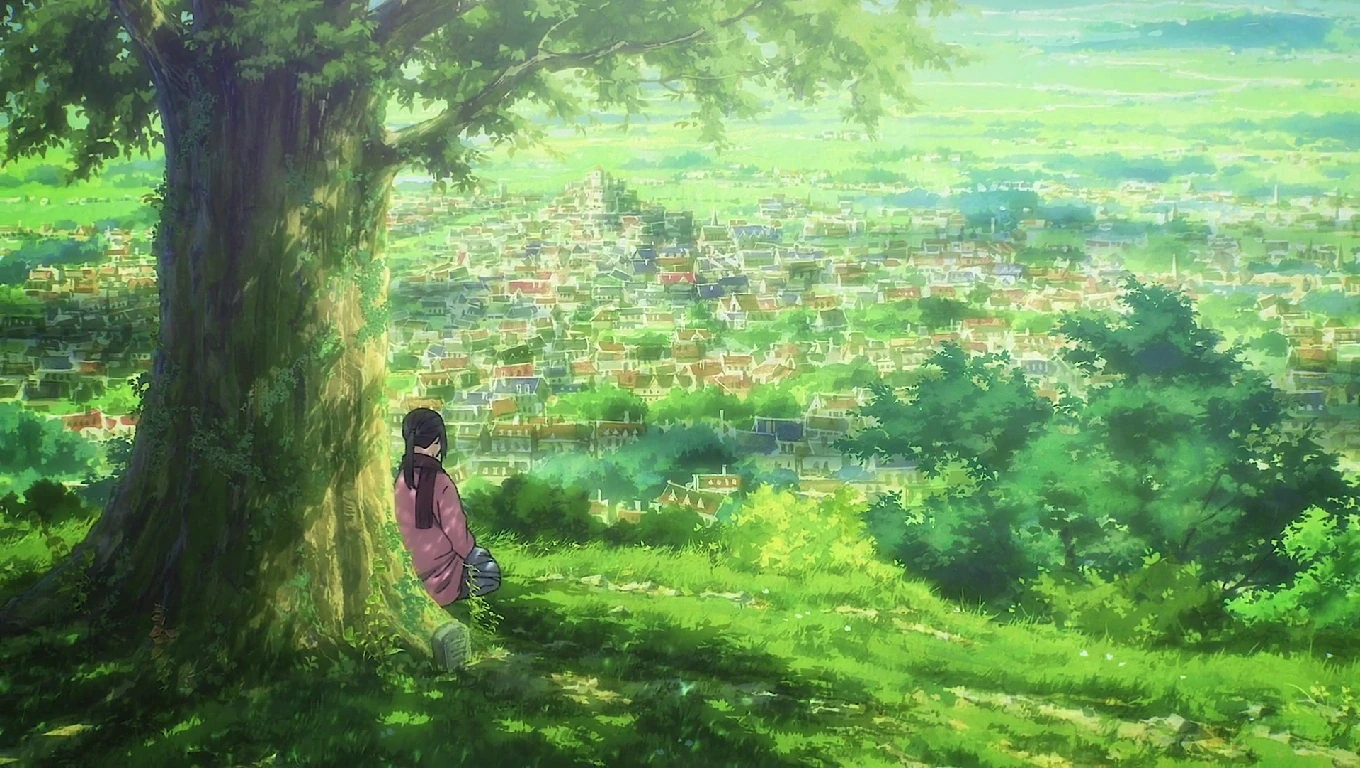
The Final Chapters, Special 2, “Toward the Tree on That Hill”. © Hajime Isayama, Kodansha / “Attack on Titan” The Final Season Production Committee. Screenshot via Attack on Titan Wiki.
What it says about real life
Take the titans out and you’re left with a very normal question: what are you drunk on? I’ve been asking myself that since the finale, and I don’t love every answer I come up with.
It could be your job, someone’s approval, an old grudge, the need to be right. None of that is evil by itself. But Kenny’s point is that everyone runs on something, and most of us never stop to check what it is. That’s how good people end up hurting others without ever feeling like the bad guy.
My take
So why do I call it the greatest story ever made? Three reasons, and yes, this is just my opinion:
It never gives you a villain. By the end you understand everyone, and you can’t fully forgive anyone.
The ending changes the beginning. Watch the first episode again after the last one and it feels like a completely different show.
It hides a love story inside a war story, and it’s the love story that ends up saving the world.
It’s not perfect. A lot of people hate the ending, and honestly, I get why. But no other story has made me think this hard about right and wrong, or about what it really means to love someone. The scene I still can’t shake is Mikasa at the end, choosing to stop the person she loves. I don’t think any story has done that better.
Disagree, or saw something I missed? Tell me. That’s half the reason I write these.
Contact
and be a part of my journey…
Click anywhere in the banner to play the song <3
PHONE
+91 7008630917
somworld47@gmail.com
©2025-All rights reserved.
Attack on Titan is the greatest story ever made
Decoding: Attack on Titan (anime, 2013–2023)
In one line: it looks like a monster show, but it’s really about why good people end up doing terrible things, and about loving someone enough to let them go.
I’m just going to say it. Attack on Titan is the greatest story ever made. I don’t mean the greatest anime, I mean the greatest story, books and films included.
I know how that sounds, so let me try and explain why I actually believe it.
The short version (no spoilers)
Humanity lives behind giant walls. Outside those walls are titans, huge grinning things that eat people, and nobody knows why. A kid named Eren watches one of them eat his mother, and he promises himself he’ll kill every last one of them.
That’s the setup, and yes, it sounds like a monster show. It really isn’t one.
Every season or so, the story flips on you. Who the enemy is, why the walls exist, which side you’re even supposed to be on, all of it keeps changing. By the end you stop asking how to kill the monsters and start asking how a person turns into one.
If you haven’t watched it yet, please stop here and go watch it first. Everything below spoils the whole thing, ending included.
Spoilers from here on.
Nobody in this story is good
Most stories give you a hero and a villain. Attack on Titan gives you people, and the walls they grew up behind.
It’s like a family fight where everyone in the room thinks they’re the reasonable one. Nobody is really lying. Everyone is telling the truth as it looks from where they’re standing. Now stretch that across whole countries, and that’s this show.
Eren grows up thinking the people across the sea are monsters. Then he goes there and finds out they were raised to think the exact same thing about him. The boy who wanted to wipe out every titan becomes the scariest thing in the story, and he never once stops believing he’s in the right.
The Final Season, Episode 5, “Declaration of War”. © Hajime Isayama, Kodansha / “Attack on Titan” The Final Season Production Committee. Screenshot via Attack on Titan Wiki.
The show never tells you who to blame. It just keeps showing you why each person did what they did, until you can’t properly hate any of them anymore. That’s the part that stays with me. Everyone is acting on what their own life taught them to believe.
Season 3, Episode 10, “Friends”. © Hajime Isayama, Kodansha / “Attack on Titan” Production Committee. Screenshot via Attack on Titan Wiki.
Kenny Ackerman says it best, which is funny, because he’s a killer and he says it while he’s dying:
“Everyone had to be drunk on something to keep pushing on. Everyone was a slave to something.”
Kenny Ackerman, Season 3, Episode 10
He looks back at everyone he knew and sees the same thing in all of them. Some were drunk on power, some on a dream, some on family, some on an idea of how the world should be. None of them were free. They were just loyal to different things.
That’s about as close as the show gets to a moral. It never tells you to be good. It just asks you to notice what you’re drunk on.
Armin, the softest person in the whole series, puts the cost of it differently:
“Someone who can’t sacrifice anything can never change anything.”
Armin Arlert, Season 1
When he first says it, it sounds brave. By the end you know exactly what it costs.
It isn’t really Eren’s story
Eren is on the poster and in the opening, and he’s the one pushing the plot forward. But I don’t think it’s his story. I think it belongs to two women, Mikasa and Ymir.
The Final Season. © Hajime Isayama, Kodansha / “Attack on Titan” The Final Season Production Committee. Screenshot via Attack on Titan Wiki.
Everything starts with Ymir. Two thousand years before Eren, she was a slave who got the power of the titans, and she still kept serving the king who owned her. She died taking a spear that was meant for him. Even death didn’t end it. For two thousand years she kept making titans for his bloodline, because she loved him and couldn’t stop obeying him.
Sit with that for a second. Every wall and every war in this world comes from one woman who couldn’t let go of someone she loved.
Season 1, Episode 6. © Hajime Isayama, Kodansha / “Attack on Titan” Production Committee. Screenshot via Attack on Titan Wiki.
Then there’s Mikasa. She has followed Eren since they were kids, ever since the day he wrapped his red scarf around her neck. She’s the strongest fighter in the show, and nearly everything she does, she does for him.
At the end, Eren is about to wipe out most of the world, and Mikasa does the one thing Ymir never could. She stops the person she loves.
Then we find out Ymir had been watching Mikasa all along. For two thousand years she was waiting for someone to show her that you can love a person and still refuse to follow them. When Mikasa makes that choice, Ymir is finally free, and the titans are gone from the world.
So under all the monsters, it was a love story the whole time. Even the very first episode is called To You, in 2000 Years. I’m pretty sure it’s addressed to Ymir.
The greatest love story, with almost no romance
This is the part that gets me the most. In four seasons there are no dates, no confessions, no slow dances. The closest we get is a life Eren and Mikasa only get to imagine, and one goodbye right at the end.
The Final Chapters, Special 2. © Hajime Isayama, Kodansha / “Attack on Titan” The Final Season Production Committee. Screenshot via Attack on Titan Wiki.
And somehow it’s still the most powerful love story I know.
Think of a parent watching their kid leave home. Loving them means letting them go, even when every part of you wants to hold on. Most love stories are about two people ending up together. This one is about the moment love asks you to let go.
Mikasa’s love for Eren never looks like romance. It looks like a scarf she never takes off, and a choice she never wanted to make.
Early on, Mikasa says the line the whole series is built on:
“This world is cruel… but it’s also very beautiful.”
Mikasa Ackerman, Season 1, Episode 6
By the last episode, Toward the Tree on That Hill, you realise she meant both halves of it.
The Final Chapters, Special 2, “Toward the Tree on That Hill”. © Hajime Isayama, Kodansha / “Attack on Titan” The Final Season Production Committee. Screenshot via Attack on Titan Wiki.
What it says about real life
Take the titans out and you’re left with a very normal question: what are you drunk on? I’ve been asking myself that since the finale, and I don’t love every answer I come up with.
It could be your job, someone’s approval, an old grudge, the need to be right. None of that is evil by itself. But Kenny’s point is that everyone runs on something, and most of us never stop to check what it is. That’s how good people end up hurting others without ever feeling like the bad guy.
My take
So why do I call it the greatest story ever made? Three reasons, and yes, this is just my opinion:
It never gives you a villain. By the end you understand everyone, and you can’t fully forgive anyone.
The ending changes the beginning. Watch the first episode again after the last one and it feels like a completely different show.
It hides a love story inside a war story, and it’s the love story that ends up saving the world.
It’s not perfect. A lot of people hate the ending, and honestly, I get why. But no other story has made me think this hard about right and wrong, or about what it really means to love someone. The scene I still can’t shake is Mikasa at the end, choosing to stop the person she loves. I don’t think any story has done that better.
Disagree, or saw something I missed? Tell me. That’s half the reason I write these.
Contact
and be a part of my journey…
Click anywhere in the banner to play the song <3
PHONE
+91 7008630917
somworld47@gmail.com
©2025-All rights reserved.